Dr. The Right Honourable
Eric Eustace Williams
TC, CH

Trinidad & Tobago
Eric Eustace Williams
September 25, 1911
-
March 29, 1981
Eric Eustace Williams was a towering figure in Caribbean history, a brilliant scholar, historian, educator, and statesman who led Trinidad and Tobago from colonial rule to independence and beyond. As the founder of the People’s National Movement (PNM) and the country’s first Prime Minister, serving from 1962 until his death in 1981, he earned the enduring title “Father of the Nation.” His leadership transformed Trinidad and Tobago into a stable, prosperous democracy and influenced broader Caribbean integration efforts. Williams was also a pioneering intellectual whose seminal work, Capitalism and Slavery (1944), reshaped global understandings of the transatlantic slave trade and its economic legacies.
Early Life and Education
Born on September 25, 1911, in Port of Spain, Trinidad, Eric Williams was the eldest of 12 children to Thomas Henry Williams, a postal clerk, and Eliza Frances Boissiere. His family was of modest means, but young Eric demonstrated exceptional academic promise from an early age. He began his education at Tranquillity Boys’ Intermediate Government School and won a scholarship to Queen’s Royal College (QRC) in Port of Spain in 1921.
At QRC, Williams excelled both academically and athletically, participating in football (soccer) and cricket. A football injury during his time there caused a lasting hearing impairment, for which he later wore a hearing aid—a detail that became part of his public persona. Despite this challenge, he thrived. In 1931 (on his third attempt), he won the prestigious Island Scholarship, which enabled him to attend St. Catherine’s College (then Society), Oxford University.
At Oxford, Williams distinguished himself in history. He earned a First Class Honours B.A. in 1935 (ranking first among history graduates) and completed his D.Phil. in 1938. His doctoral thesis, “The Economic Aspect of the West Indian Slave Trade and Slavery,” laid the foundation for his groundbreaking book Capitalism and Slavery. This work argued that the profits from the slave trade and plantation economies were central to the accumulation of capital that fueled Britain’s Industrial Revolution, challenging traditional narratives and sparking decades of scholarly debate. It remains a classic in Caribbean and Atlantic history.
Academic and Early Professional Career
After Oxford, Williams moved to the United States in 1939, joining the faculty at Howard University in Washington, D.C., as an assistant professor of social and political science. He became a respected lecturer, developing influential courses, including a humanities program supported by a three-volume compilation, Documents Illustrating the Development of Civilization (1947).
During his time at Howard, Williams engaged with the Anglo-American Caribbean Commission (later the broader Caribbean Commission), an international body established to coordinate postwar economic development in the region. He rose to head its Research Branch in 1948 but grew frustrated with colonial dynamics and bureaucratic constraints. In 1955, he resigned dramatically and returned to Trinidad, delivering a landmark public lecture, “My Relations with the Caribbean Commission,” which signaled his shift toward active politics.
Entry into Politics and the Birth of the PNM
Back in Trinidad, Williams channeled his intellectual energy into grassroots education and political organizing. He delivered a series of popular public lectures in Woodford Square in Port of Spain—known as the “University of Woodford Square”—addressing issues of colonialism, education, and self-government. These speeches galvanized public support and established him as a compelling orator and nationalist leader.
In 1956, Williams founded the People’s National Movement (PNM), Trinidad and Tobago’s first modern mass political party. The PNM emphasized education, economic development, and anti-colonialism. In the 1956 general elections, the party secured a decisive victory, and Williams became Chief Minister, holding key portfolios including finance and development. He advanced to Premier in 1959 under internal self-government.
Williams navigated complex regional politics, including participation in the short-lived West Indies Federation (1958–1962). When the federation collapsed, he focused on full independence for Trinidad and Tobago. The PNM won a landslide in 1961, and on August 31, 1962, Trinidad and Tobago achieved independence within the Commonwealth. Williams became the nation’s first Prime Minister.
Prime Ministership and Nation-Building
As Prime Minister (1962–1981), Williams pursued “pragmatic socialism”—a balanced approach emphasizing social services, expanded education, infrastructure development, and cautious attraction of foreign investment, particularly in oil and petrochemicals. Under his leadership, Trinidad and Tobago became the wealthiest nation in the Commonwealth Caribbean, leveraging its petroleum resources for economic growth while investing heavily in education and social welfare.
Key achievements included:
- Education Reform: Massive expansion of access to secondary and higher education, including the establishment of the University of the West Indies campus in Trinidad.
- Economic Diversification: Efforts to reduce dependence on oil through industrialization and agriculture.
- Constitutional Development: Guiding the country to republican status in 1976, replacing the British monarch with a President as head of state.
- Regional Integration: Foundational contributions to CARIFTA (Caribbean Free Trade Association) and later CARICOM (Caribbean Community), promoting economic cooperation across the region.
Williams led the PNM to repeated electoral victories, maintaining power through turbulent times, including the 1970 Black Power protests and economic challenges. His style was intellectual and sometimes aloof; he was known for pulling out his hearing aid during debates when it suited him, a quirk that added to his enigmatic reputation.
Personal Life
Williams was married twice. His first marriage was to Elsie (or Mayleen) Mook Sang, with whom he had children. His second wife, Evelyn (Soy) Moyou (1924–1953), whom he considered the love of his life, passed away young; they had a daughter, Erica Williams Connell, who later became a key figure in preserving his legacy through the Eric Williams Memorial Collection. He had three children in total: daughters Pamela and Erica, and son Alastair.
Known as “The Doc,” Williams was a voracious reader and prolific writer. His autobiography, Inward Hunger: The Education of a Prime Minister (1969), offers insights into his intellectual formation and political philosophy.
Death and Legacy
Eric Williams died on March 29, 1981, at his official residence in St. Ann’s, near Port of Spain, while still in office at age 69. His death triggered national mourning, reflecting the profound impact he had on the nation.
Williams’ legacy is immense. He is revered for shepherding Trinidad and Tobago to independence and stability, fostering national identity, and advancing Caribbean scholarship. Capitalism and Slavery continues to influence historians worldwide. Critics sometimes point to authoritarian tendencies or unfulfilled diversification goals, but his achievements in education, economic progress, and sovereignty are undisputed.
Posthumously awarded the Trinity Cross (Trinidad and Tobago’s highest honor) in 2002, Williams remains a symbol of intellectual leadership and national pride. Institutions like the Eric Williams Memorial Collection at the University of the West Indies preserve his papers and continue his scholarly tradition. His vision of a self-reliant, educated, and unified Caribbean echoes in ongoing regional efforts.
In the words of many Trinbagonians, Eric Williams did not merely govern—he transformed a colony into a nation, instilling pride and possibility in its people. His life exemplifies how intellect, determination, and vision can reshape history.
My Caribbean
Legends from Trinidad & Tobago
Caribbean Heritage
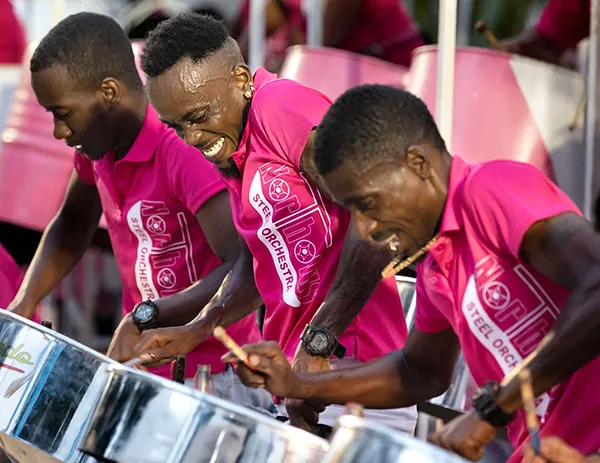
Where did the musical instrument known as the Steel Pan originally originate from?
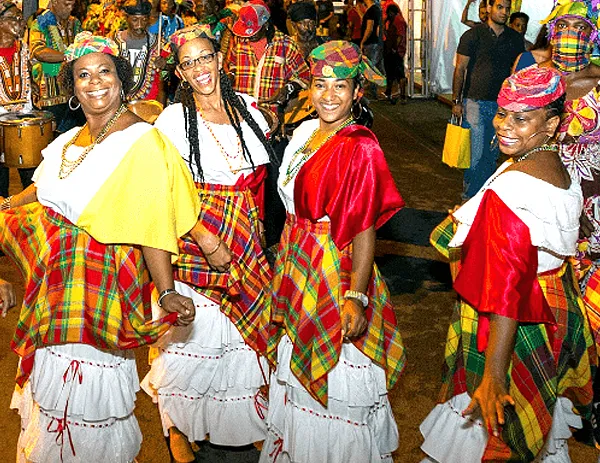
What major cultural celebration highlights Saint Lucia’s Creole heritage?
Ackee and Saltfish is the national dish of which Caribbean country?