
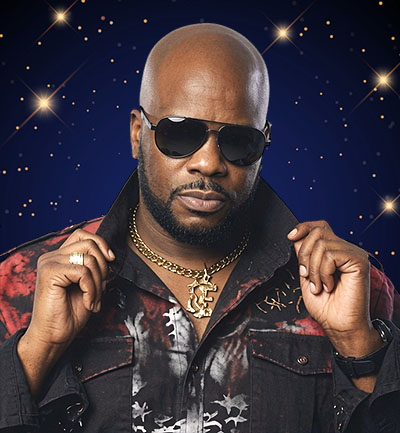
Oscar Dennis Benjamin
1969
-
2026

Trinidad & Tobago
Facebook
WhatsApp
Oscar Dennis Benjamin
April 1, 1969
-
June 28, 2026
Oscar Dennis Benjamin, celebrated throughout the global Caribbean diaspora simply as Oscar B, entered the world in 1969 in Signal Hill, Tobago, a sister isle of Trinidad. Born into a vibrant landscape rich with oral traditions, folklore, and the hypnotic pulse of steelpan and calypso, Oscar’s destiny was bound to music from his earliest days. Growing up in a culture where rhythm serves as the heartbeat of everyday life, his intrinsic vocal gift was recognized early by his family and neighbors.
Oscar’s formal musical training began in the sacred spaces of the Scarborough Methodist Church choir. It was within this church community that he learned to project his voice, master pitch, and understand the collective power of vocal harmony. The spiritual discipline of choral singing provided him with a technical foundation that would define his future professional career.
In 1982, he joined the legendary Signal Hill Alumni Choir. This move proved pivotal, as the group was highly regarded for elevating Tobagonian folk and choral arrangements to national prominence. Singing with the ensemble exposed a young Oscar to larger stages across Trinidad and Tobago, instilling in him a deep sense of national pride and an unwavering commitment to cultural preservation. His time with the choir solidified his reputation as an outstanding young vocalist, setting the stage for his transition from traditional folk and gospel music into the high-energy arena of contemporary Caribbean entertainment.
Stepping Into the Spotlight: The Trinidad Brass Scene
As the late 1980s approached, Oscar B made the definitive leap across the waters to Trinidad, the undisputed engine of the global Carnival industry. He sought to test his vocal talents against the most rigorous and competitive musical environments in the region: the live brass band circuit. Trinidad’s music scene at the time was dominated by massive, instrumentation-heavy orchestras that backed calypsonians and delivered hours of non-stop dance music to thousands of revelers during the annual Carnival season.
Oscar B secured his first major professional breakthrough when he joined Blue Ventures, one of Trinidad’s most respected and enduring brass bands. Serving as a frontline vocalist for Blue Ventures required immense stamina, vocal versatility, and an ability to read and manipulate the energy of massive, demanding crowds. Oscar flourished in this environment. He absorbed the nuances of calypso, soca, and the burgeoning fusions of the era, refining a charismatic stage presence that combined fluid dance moves with an infectious, booming vocal delivery. His time with Blue Ventures established him as a premier entertainer on the mainland, setting the stage for an international breakthrough.
The Golden Era: Byron Lee & The Dragonaires
In 1991, destiny intervened during an explosive performance at a regional Brass Festival in Trinidad. Oscar B’s electric showmanship and vocal power caught the attention of Byron Lee, the leader of the legendary Jamaican band Byron Lee & The Dragonaires. Recognizing Oscar's cross-genre appeal and magnetic stage presence, Lee recruited the young Trinidadian to join the iconic outfit as one of its principal vocalists.
This appointment was a historic milestone. Oscar B achieved something very few Tobagonian artists had before him: he became a central ambassador for his home country’s music on one of the largest and most influential international stages in the Caribbean. For the next 18 years, Oscar B fronted Byron Lee & The Dragonaires, touring extensively across the Caribbean, North America, Europe, and Latin America.
During this golden era, Oscar B became the voice behind a string of massive, genre-defining hits that transformed Caribbean dancefloors. He brought a distinct Trinidadian soca sensibility to the Jamaican outfit, bridging the gap between dancehall and soca music. His signature track, "Soca Tatie"—a collaboration with Jamaican dancehall star Admiral Bailey—became an international anthem, followed closely by the iconic "Soca Bogle" and the globally beloved "Soca Butterfly." Through these tracks, Oscar B pioneered the popular "Ragga Soca" movement, blending the syncopated rhythms of Trinidadian soca with the gritty lyrical delivery of Jamaican dancehall. He also helped popularize classic, joyous tracks like "Girlie-Girlie" and performed definitive renditions of soca staples like "Tiny Winey," ensuring that the band dominated carnivals worldwide.
The Cross-Cultural Ambassador and the Belize Connection
Oscar B’s work with the Dragonaires extended far beyond conventional carnival spaces. He developed an extraordinarily deep, lifelong relationship with the nation of Belize. Performing annually as part of Belize's September Celebrations, Oscar B became a household name and a beloved cultural fixture in Central America.
His explosive performances, punctuated by his trademark “butterfly” dance move, created enduring musical memories for generations of Belizeans. Long after his formal tenure with the Dragonaires concluded, Oscar continued to return to Belize as a solo artist. He viewed these performances not as mere commercial engagements, but as labors of love. He frequently directed portions of his earnings back into local communities, cementing his status as a genuine humanitarian and a cross-cultural ambassador who used music to build international solidarity.
Versatility, Chutney Soca, and Solo Ventures
A true testament to Oscar B’s immense talent was his unparalleled musical versatility. He refused to be confined to a single sub-genre of Caribbean music. Upon returning to Trinidad and Tobago to focus on local enterprises, he took over as the frontman for the prominent chutney-soca band Gayatones. Chutney soca, which blends traditional Indo-Caribbean rhythms, instruments, and melodies with fast-paced soca, requires a unique vocal style and a precise understanding of Trinidad’s multicultural fabric. Oscar mastered this transition effortlessly, delivering vibrant hits and bridging cultural divides.
Driven by a desire to maintain creative independence and champion live instrumentation, he eventually established his own live entertainment groups: Karybbean Vybz and, subsequently, Oscar B and Vibes. As the leader of Oscar B and Vibes, he mentored younger musicians and insisted on performing with a full live band, resisting the industry shift toward digital playback tracks. He firmly believed that soca was a living, breathing experience that required raw, authentic human passion to be truly appreciated.
Even late into his career, Oscar B remained an active, fiercely competitive participant in the traditional cultural landscape. He regularly competed in the calypso arena, participating in prestigious events like the Kaiso Karavan and the Young Kings competitions. He showcased his enduring relevance and sharp social wit by competing with his timely track "AI vs Man," proving that his lyrical sharpness had not waned over four decades in the industry.
Government Recognition and National Tributes
Oscar B's immense contributions did not go unnoticed by the state. He was officially recognized and honored by the government bodies of Trinidad and Tobago for his lifelong dedication to cultural preservation. The Ministry of Culture and Community Development formally proclaimed Oscar B as a "cherished son of Tobago and a celebrated ambassador of our culture," explicitly cementing his status as a permanent state asset in the history of Caribbean arts.
Further institutional acclaim came from the National Carnival Commission (NCC) of Trinidad and Tobago. The NCC honored him as a beacon of true cultural excellence, highlighting how his career successfully charted a path that showcased the rich, diverse range of musical talent native to the twin-island republic. His constant participation in state-backed cultural tournaments like the Young Kings competition further solidified his status as an artist who respected and elevated national traditions. He was widely praised by officials for never letting the public forget what true cultural excellence looked like on a global stage.
Sunset: The Final Movement of a Legend
The final chapter of Oscar B’s illustrious life was met with profound sadness across the Caribbean community. In May 2026, the legendary entertainer suffered a severe stroke that left him facing critical medical challenges. True to his reputation as a beloved cultural icon, the community and the government rallied around him. In a powerful demonstration of state support, the Tobago House of Assembly (THA), led by Chief Secretary Farley Augustine, officially approved emergency state funds during a formal parliamentary budget debate to assist the singer with his rising medical expenses. Chief Secretary Augustine publicly hailed the global legacy of Oscar B, noting that his artistic mark was respected as far as Jamaica and beyond.
His community organized a massive benefit event, the "Tobago Family & Friends Healing Concert," scheduled to take place at the Shaw Park Cultural Complex to raise additional funds for his care. However, in a deeply poignant twist of fate, Oscar B’s sunset arrived just hours before the concert was set to begin. On the morning of June 28, 2026, Oscar Dennis Benjamin passed away at the age of 57.
Instead of a fundraiser, the gathering at the Shaw Park Cultural Complex transformed into an emotional, triumphant celebration of his life, supported by cultural authorities. Fellow musicians, political dignitaries, and legions of devoted fans gathered to sing his anthems, shed tears, and honor a man who spent his life generating joy for others.
An Enduring Musical Legacy
Oscar B’s sudden departure leaves a profound void in the fabric of Caribbean entertainment, but his legacy remains completely unshakeable. He was more than a gifted vocalist; he was a model of humility, kindness, and artistic integrity. Throughout his decades on stage, he always gave his audiences more than what was required, frequently performing well past his contracted times out of pure love for his craft.
From his early sunlit days in the Scarborough Methodist Church choir to his international triumphs with Byron Lee & The Dragonaires, Oscar B carried the flag of Tobago and the wider Republic of Trinidad and Tobago with immense dignity. His infectious smile, boundless energy, and groundbreaking contributions to Ragga Soca, Chutney, and traditional Calypso ensure that his voice will never truly fall silent. Whenever a carnival truck rolls down the streets, or a crowd lifts their hands to dance the butterfly, the spirit of Oscar B will live on forever.
My Caribbean
Cherished people from Trinidad & Tobago



Caribbean Heritage
What Caribbean country is known as the "Spice Isle"?

Where did the musical instrument known as the Steel Pan originally originate from?
Ackee and Saltfish is the national dish of which Caribbean country?