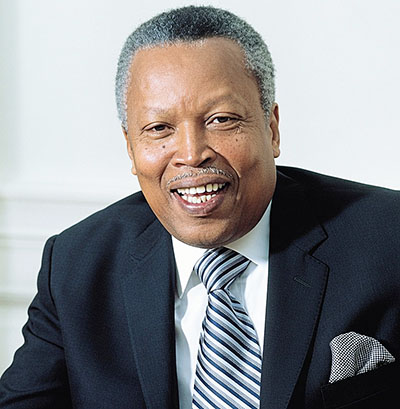
The Most Honourable
Hugh Lawson Shearer
ON, OJ, PC

Jamaica
Hugh Lawson Shearer
May 18, 1923
-
July 5, 2004
Hugh Lawson Shearer: Trade Unionist, Statesman, and Jamaica’s Third Prime Minister
Hugh Lawson Shearer, ON, OJ, PC (18 May 1923 – 5 July 2004), stands as one of Jamaica’s most influential figures in the post-independence era. A dedicated trade unionist and skilled politician, he served as the country’s third Prime Minister from 1967 to 1972. His leadership emphasized economic growth, workers’ rights, education, and international diplomacy. Shearer’s career spanned over five decades, during which he shaped Jamaica’s labour movement, navigated the challenges of nation-building, and left a lasting legacy in infrastructure, human rights advocacy, and economic development.
Early Life and Education
Born on 18 May 1923 in the village of Martha Brae, just outside Falmouth in Trelawny Parish, Hugh Lawson Shearer came from humble beginnings. His father, James Shearer, was a World War I ex-serviceman, while his mother, Esther Lindo, worked as a dressmaker. These roots instilled in him a deep understanding of ordinary Jamaicans’ struggles.
Shearer attended Falmouth Primary School, where his academic promise earned him a parish scholarship to St. Simon’s College, a prestigious private high school in Kingston. He graduated in 1940, entering the workforce during a turbulent period of labour unrest and political awakening in Jamaica. The 1938 labour riots had galvanized figures like Sir Alexander Bustamante and Norman Manley, setting the stage for Jamaica’s push toward self-governance. Shearer’s distant kinship ties to both leaders would later influence his path.
Entry into Journalism and the Trade Union Movement
In April 1941, Shearer began his career as a trainee journalist at the Jamaica Worker, the weekly newspaper of the Bustamante Industrial Trade Union (BITU). This role marked the start of his lifelong commitment to labour rights. When Bustamante assumed editorship in 1943, he mentored the young Shearer, accelerating his rise within the union.
While editing the paper, Shearer apprenticed as a trade unionist, participating in key negotiations and organizing efforts alongside Bustamante. He gained practical experience in labour disputes, honing skills in advocacy and mediation that defined his career. In 1947, he was appointed Assistant General Secretary of the BITU and won a seat on the Kingston and St. Andrew Corporation Council for Central St. Andrew. That same year, he attended a Colonial Development and Welfare Trade Union Scholarship course in Barbados, broadening his expertise.
Shearer’s political baptism came during the 1944 elections, where he campaigned vigorously for Bustamante and the Jamaica Labour Party (JLP). Though he lost his own bid for Western Kingston in 1949, his influence grew. By 1953, he became Island Supervisor of the BITU, and in 1955, he successfully entered the House of Representatives, serving in opposition until 1959. In 1960, he was elected Vice-President of the BITU, second only to Bustamante.
Rise in National Politics and Path to Prime Ministership
Shearer played a pivotal role in Jamaica’s journey to independence. In the 1961 referendum on the West Indies Federation, the BITU under his leadership supported the JLP’s successful campaign for Jamaica to pursue independence alone. Following the JLP’s victory in subsequent elections, he was appointed to the Legislative Council (later the Senate), serving as Leader of Government Business and Minister without Portfolio. He also acted as Jamaica’s Deputy Chief of Mission at the United Nations, engaging in critical international matters.
In 1963, Shearer proposed to the UN that 1968 be designated International Human Rights Year—a motion that was adopted globally. He represented Jamaica at the 1966 Commonwealth Prime Ministers’ Conference. In the 1967 general elections, he won the Southern Clarendon seat previously held by Bustamante. Shortly after, following the sudden death of Prime Minister Sir Donald Sangster, Shearer was selected as Jamaica’s third Prime Minister on 11 April 1967. At age 43, he was one of the youngest to hold the office. He was later appointed to the Privy Council of England by Queen Elizabeth II in 1969.
Prime Ministerial Tenure (1967–1972): Economic Boom and Social Reforms
Shearer’s premiership is often remembered as one of Jamaica’s most productive periods. Under his leadership, the economy flourished, achieving the highest GDP per capita in the nation’s history at approximately US$2,300. This growth was driven by rapid expansion in agriculture, bauxite mining, and tourism. Three new alumina refineries and three major tourist resorts were constructed, laying the foundation for these key foreign exchange earners.
Infrastructure development was a priority. Shearer initiated a major highways program, beginning with the Kingston to Spanish Town Highway and planning bypass routes to alleviate urban congestion. His administration focused heavily on education. Through the New Deal Education Programme, supported by the Canadian International Development Agency (CIDA), secondary school enrollment doubled, and fifty new schools were built. This initiative aimed to provide quality education for every Jamaican child, transforming access and opportunity.
In foreign affairs, Shearer excelled as a negotiator. At a Commonwealth Conference in Zambia, he secured a managed market for Caribbean bananas, a vital lifeline for the region’s economy. British Prime Minister Edward Heath later praised his statesmanship. Shearer also advocated successfully for the International Seabed Authority to be headquartered in Kingston.
However, his term faced challenges. In 1968, the government’s ban on historian Walter Rodney led to the Rodney Riots in Kingston. Shearer defended the decision, citing concerns over radical influences, reflecting his cautious approach to pan-Africanism and militant ideologies amid Jamaica’s post-independence uncertainties. Despite this, he maintained strong support among working-class Jamaicans due to his union roots.
The JLP lost the 1972 general election to Michael Manley’s People’s National Party. Shearer remained Leader of the Opposition until 1974.
Return to Trade Union Leadership and Later Political Roles
After stepping down as JLP leader (succeeded by Edward Seaga), Shearer refocused on the BITU. In 1977, he became its President and expanded it into the largest trade union in the English-speaking Caribbean. He also contributed to establishing the Joint Trade Union Research Institute in 1980, a pioneering regional initiative.
Following the JLP’s 1980 electoral victory, Shearer served as Deputy Prime Minister and Minister of Foreign Affairs and Foreign Trade under Seaga until 1989. He continued representing Southern Clarendon in Parliament until losing his seat in 1993, after which he retired from active politics.
Personal Life and Family
Shearer married his first wife, Lunette (an accounting clerk), in 1947. They had three children before separating. In 1998, he married Dr. Denise Eldemire-Shearer, daughter of Jamaica’s first Health Minister, Dr. Herbert Eldemire. Shearer had five children in total and was known for his dedication to family alongside public service.
Death and Enduring Legacy
Hugh Lawson Shearer passed away at his Kingston home on 15 July 2004 at age 81. He was survived by his wife Dr. Denise Eldemire-Shearer and his children.
His legacy endures through numerous honours. He received the Order of Jamaica (1990) and the Order of the Nation (2002). Honorary Doctor of Laws degrees were conferred by Howard University (1968) and the University of the West Indies (1994). In 2009, the Bank of Jamaica issued a $5,000 note featuring his portrait (later shared with Donald Sangster), and in Jamaican slang, the note is affectionately called a “Shearer.”
Shearer is remembered as a champion of workers’ rights, a pragmatic leader who fostered economic prosperity, and a statesman who elevated Jamaica’s global standing. His emphasis on education, infrastructure, and negotiated trade benefits helped modernize the nation. As Jamaica continues to evolve, Hugh Lawson Shearer’s contributions remain a cornerstone of its national identity—a voice for the people who guided the country through its formative independent years with vision, integrity, and unwavering commitment.
My Caribbean
Legends from Jamaica
Caribbean Heritage
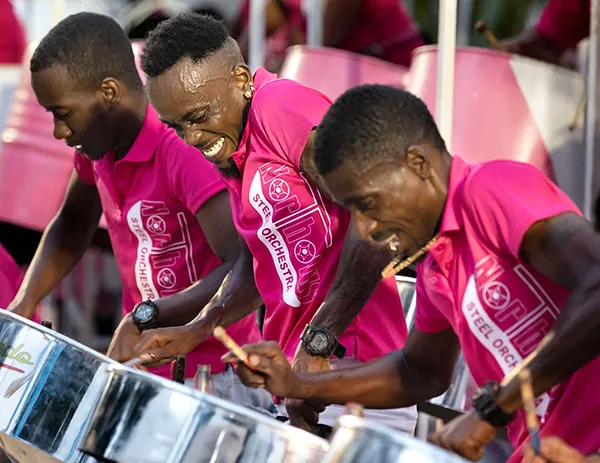
Where did the musical instrument known as the Steel Pan originally originate from?
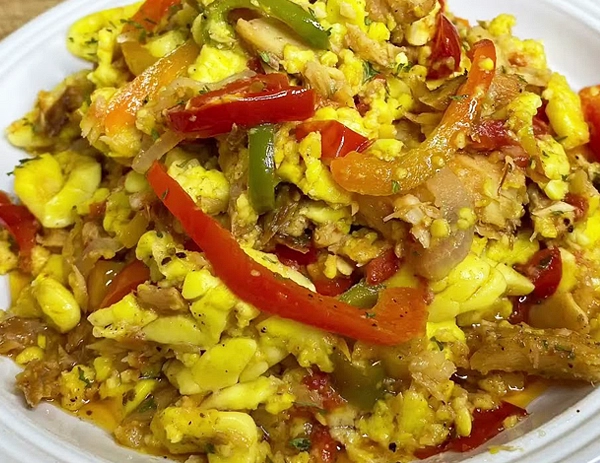
Ackee and Saltfish is the national dish of which Caribbean country?
What major cultural celebration highlights Saint Lucia’s Creole heritage?