
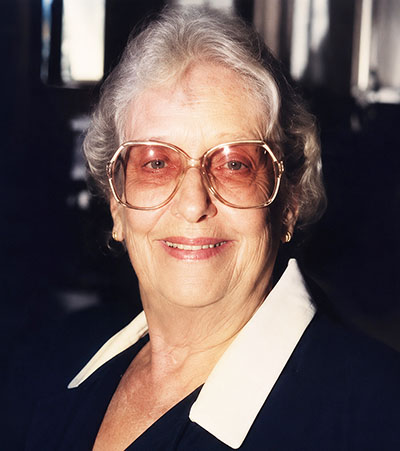
Her Excellency
Janet Rosenberg Jagan
O.E.

Guyana
Janet Rosenberg Jagan
October 20, 1920
-
March 28, 2009
A Life of Service, Struggle, and Leadership
Early Life and Family Background
Janet Jagan was born Janet Rosalie Rosenberg on October 20, 1920, in Chicago, Illinois, United States. She was raised in a middle class Jewish family during a period marked by economic uncertainty and social change. From an early age, she developed a strong sense of justice and concern for ordinary people, values that would shape her life's work and political beliefs.
As a young woman, Janet pursued studies in nursing and worked as a student nurse at Cook County Hospital in Chicago. It was there, in 1942, that she met a young dentistry student from British Guiana named Cheddi Jagan. Their meeting would not only change their lives but also alter the course of Guyanese political history.
Marriage to Cheddi Jagan and Move to British Guiana
Janet and Cheddi Jagan married on August 5, 1943, despite facing opposition from some family members because of their different cultural and religious backgrounds. Shortly after their marriage, Janet left the United States and moved with her husband to British Guiana, the South American colony that would later become the independent nation of Guyana.
The move marked the beginning of her lifelong commitment to the people of Guyana. Rather than viewing herself as a foreigner, Janet embraced her new homeland and quickly became involved in community activities, labor issues, and political organizing. She worked as a dental nurse in her husband's practice while becoming increasingly active in social causes.
Political Awakening and Activism
The 1940s were a period of growing political consciousness throughout the Caribbean and other colonial territories. Janet Jagan became deeply involved in movements that sought better living conditions, workers' rights, and political self determination.
In 1946, she helped establish the Women's Political and Economic Organization, which encouraged women to participate in public life and advocate for social change. She also became active in labor movements and campaigns aimed at improving the lives of working people.
Janet believed that women should play a central role in shaping society. Throughout her career, she championed equal opportunities, social justice, education, and political participation for women. Her commitment to these causes would remain a defining feature of her public life.
Founding the People's Progressive Party
One of Janet Jagan's most significant contributions came in 1950 when she joined her husband, Cheddi Jagan, and other political leaders in founding the People's Progressive Party (PPP). The party sought to unite Guyanese citizens across ethnic and social divisions while advocating for independence from British colonial rule.
The PPP quickly became one of the most influential political organizations in the country. Janet served as a key strategist, organizer, and spokesperson. Many observers regarded her as one of the intellectual forces behind the movement. She later served as General Secretary of the party for nearly two decades.
The Jagans' socialist political views attracted attention both locally and internationally. During the Cold War, their activism generated concern among colonial authorities and Western governments. Nevertheless, Janet remained steadfast in her belief that Guyanese people deserved political freedom and economic opportunity.
Service in Government
Following electoral victories by the PPP in the 1950s, Janet Jagan became one of the most prominent women in Caribbean politics. She was elected to the legislature and became one of the first women to hold high political office in British Guiana. She served as Deputy Speaker and later held ministerial positions, including responsibilities for labor, health, housing, and home affairs.
Her political career was not without hardship. During periods of political tension, Janet and Cheddi Jagan faced imprisonment, house arrest, and constant scrutiny from colonial authorities. Yet these experiences strengthened her resolve rather than diminishing it.
Throughout the following decades, she remained one of the country's most recognizable political figures. She won multiple parliamentary elections and became one of the longest serving legislators in Guyanese history.
First Lady of Guyana
In 1992, Guyana held elections widely regarded as free and fair after years of political controversy. Cheddi Jagan became President of Guyana, and Janet assumed the role of First Lady. However, she was never a ceremonial figure. She remained active in politics, public service, journalism, and party affairs.
During this period, she continued to advocate for education, social development, and democratic governance. Her influence within the People's Progressive Party remained significant, and many viewed her as one of the most experienced political leaders in the country.
Becoming Guyana's First Female Prime Minister
In March 1997, following the death of President Cheddi Jagan, Janet Jagan was appointed Prime Minister and First Vice President of Guyana. This historic achievement made her the first woman to serve as Prime Minister of Guyana.
Later that year, she became the presidential candidate of the People's Progressive Party. Despite facing criticism related to her age, ethnicity, and American birth, she campaigned vigorously and won the national election.
President of Guyana
On December 19, 1997, Janet Jagan was sworn in as the sixth President of Guyana. Her election was historic in several respects. She became Guyana's first female president and one of the few women serving as a head of government in the Caribbean at the time.
Her presidency focused on economic development, poverty reduction, democratic governance, and environmental sustainability. She sought to continue many of the policies associated with her late husband's administration while addressing the challenges facing a developing nation.
However, her time in office was marked by political tensions and protests following the 1997 election. Despite these difficulties, she worked to maintain stability and dialogue within the country.
In 1999, after suffering health complications, including a heart condition, Janet Jagan resigned from the presidency. She was succeeded by Bharrat Jagdeo.
Author, Journalist, and Advocate
Beyond politics, Janet Jagan was an accomplished writer and journalist. She edited the newspaper Mirror for many years and contributed extensively to political commentary and public discussion. She also wrote several children's books that reflected Guyanese culture and heritage.
Her literary work demonstrated her commitment to education and preserving national identity. She believed that stories could help young people appreciate their country's history and values.
Death and Legacy
Janet Jagan died on March 28, 2009, in Georgetown, Guyana, at the age of 88. Her passing marked the end of a remarkable political career that had spanned more than half a century.
Today, Janet Jagan is remembered as one of the most influential women in Caribbean political history. She played a central role in Guyana's struggle for self determination, helped build one of the country's major political parties, served as its first female Prime Minister and President, and dedicated her life to the pursuit of social justice and national development.
Her story is unique in Caribbean history. Born in Chicago, she chose Guyana as her home and spent more than six decades working on behalf of its people. Through activism, public service, journalism, and political leadership, Janet Jagan left a lasting imprint on Guyana and the wider Caribbean, ensuring that her legacy continues to be remembered long after her passing.
My Caribbean
Legends from Guyana
Caribbean Heritage
What major cultural celebration highlights Saint Lucia’s Creole heritage?
Which two nations fought for control of St. Kitts in the 1600s?

Ackee and Saltfish is the national dish of which Caribbean country?