
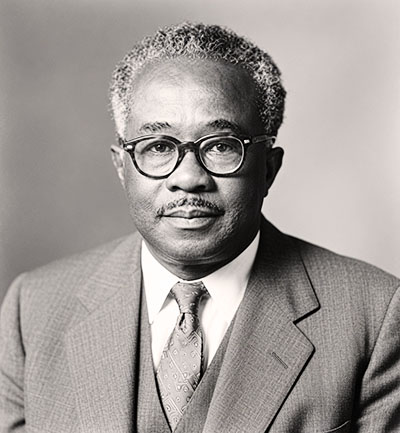
The Honourable
Robert Milton Cato
PC. Esq.
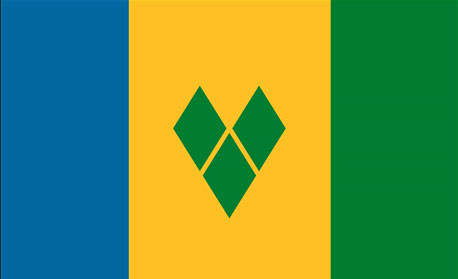
St. Vincent
Robert Milton Cato
June 3, 1915
-
February 10, 1997
Early Life and Foundations
Robert Milton Cato was born on June 3, 1915, on the island of Saint Vincent, which was at that time a part of the British Windward Islands. Growing up in a colonial environment, Cato demonstrated early intellectual promise and a strong work ethic. He secured admission to the Saint Vincent Grammar School, attending from 1928 to 1933. This institution was crucial in shaping the minds of the young men who would later challenge the colonial status quo across the region.
During this era, the territory was officially known simply as the Colony of Saint Vincent. While the state included a chain of smaller islands to the south known as the Grenadines, these dependencies were legally swallowed under the administrative umbrella of the main island. They lacked any distinct recognition in the formal name of the colony, a legal omission that Cato would eventually spend decades working to change.
Upon completing his secondary education, Cato chose a career path in law, which was one of the few avenues available for ambitious young West Indians seeking to influence their society. He began his legal journey by being articled to a practicing barrister at law in the capital city of Kingstown. This practical apprenticeship gave him a deep understanding of the local legal structure, the grievances of the working class, and the administrative mechanisms of the British Empire. This experience formed the bedrock of his long career in public service.
Military Service and International Exposure
The trajectory of Cato’s life took a dramatic turn with the escalation of the Second World War. In 1945, he chose to enlist in the First Canadian Army. This decision reflected both a commitment to the global fight against fascism and a desire to see the world beyond the Caribbean. Serving overseas, he rose to the rank of Sergeant. He saw active duty in several European theaters, including France, Belgium, Holland, and Germany.
His time in the military was highly transformative. The discipline, structural organization, and resilience required during wartime service deeply influenced his later approach to leadership and governance. Additionally, serving in a global conflict exposed him to diverse cultures and political ideologies, expanding his perspective far beyond the geographic boundaries of his home island.
Following the conclusion of the war, Cato moved to London to formalize his legal credentials. He enrolled at the Middle Temple and was called to the Bar in 1948. His years in postwar London coincided with a surge of anti colonial sentiment and intellectual debate among West Indian students and leaders living in the United Kingdom. This era provided him with a comprehensive understanding of constitutional law, governance, and democratic principles, equipping him with the skills necessary to lead his nation toward self-determination.
Legal Practice and Political Awakening
Cato returned home to Saint Vincent in the late 1940s as a qualified barrister. He established a legal practice that quickly earned a reputation for integrity and thoroughness. His work as a lawyer frequently brought him into contact with the daily struggles of ordinary citizens, reinforcing his belief that legal and constitutional reform was necessary to improve the lives of the Vincentian people.
During this post war period, the British West Indies experienced a powerful wave of political awakening and labor mobilization. Recognizing the need for an organized political vehicle to advocate for social justice, economic development, and constitutional advancement, Cato entered politics. In 1955, he co founded the Saint Vincent Labour Party. The party was established to champion the rights of workers, expand access to education, and systematically guide the island toward greater autonomy from British rule.
The Ascent to National Leadership
Under Cato’s strategic guidance, the Saint Vincent Labour Party steadily grew its support base. His political philosophy was rooted in a democratic socialist framework, focusing on practical economic development and social welfare rather than radical ideological shifts. His steady approach stood in contrast to some of the more turbulent political movements in neighboring Caribbean islands.
His political efforts reached a significant milestone on May 19, 1967, when he was elected as the Chief Minister of Saint Vincent. At the time, the island was transitioning through various stages of colonial autonomy. Cato focused his administration on stabilizing and diversifying the agricultural economy, which relied heavily on banana production, while simultaneously investing in public infrastructure.
Two years later, on October 27, 1969, Saint Vincent achieved Associated Statehood status, a constitutional step that gave the island full internal self government while leaving foreign affairs and defense under British control. With this change, Cato became the first Premier of Saint Vincent.
Throughout his time as Chief Minister and Premier, the country remained legally designated by the British Crown by its singular name. The residents of the Grenadine islands, such as Bequia, Mustique, and Union Island, frequently felt marginalized by this singular nomenclature, arguing that their distinct multi island identity was being erased by the mainland administration in Kingstown. Cato recognized that true national unity would require a formal elevation of these islands in the eyes of the law.
His first tenure as Premier lasted until 1972, when his party lost the general elections to a coalition led by Ebenezer Joshua and James Fitz Allen Mitchell. This period in opposition allowed Cato to rebuild his party, reevaluate national priorities, and prepare for a return to office. His political resilience was demonstrated in December 1974, when he led the Saint Vincent Labour Party back to power, reclaiming the office of Premier and initiating the final push toward complete national independence.
Architectural Path to Independence and Name Evolution
The late 1970s was a period of intense diplomatic and constitutional preparation. As Premier, Cato was the primary architect of the transition to a fully sovereign nation. In 1978, he initiated a nationwide consultation process, inviting citizens and civil society organizations to submit proposals for a new independent constitution. He then led a national delegation to the London Constitutional Conference to finalize the legal frameworks for independence.
A central point of discussion during these constitutional drafts was the formal identity of the expanding state. To address long standing grievances of geographical exclusion and to celebrate the diverse maritime culture of the southern archipelagos, Cato intentionally expanded the nomenclature of the nation. When negotiating the final constitutional order with the British government, he ensured that the dependencies were explicitly written into the sovereign identity of the state.
On October 27, 1979, exactly ten years after achieving Associated Statehood, the old colony dissolved. The nation achieved complete independence under a new, inclusive legal name: Saint Vincent and the Grenadines. Robert Milton Cato assumed office as the country’s first Prime Minister, cementing his status as the Father of Independence.
Post Independence Governance and Regional Relations
As Prime Minister of a newly independent microstate, Cato faced immediate domestic and regional challenges. Despite the inclusive new name, regional tensions persisted. Just weeks after independence, his administration had to suppress a brief armed uprising on Union Island led by secessionists in the Grenadines, demonstrating his determination to maintain national stability and enforce the newly defined constitutional borders.
In terms of foreign policy, Cato maintained a pro Western, centrist position. During the late 1970s and early 1980s, the Caribbean region saw a rise in Marxist and revolutionary movements, notably in Cuba and Grenada under the People’s Revolutionary Government. Cato rejected Marxist ideologies, viewing them as destabilizing to small island democracies. Instead, he chose to build strong bilateral ties with pro Western regional neighbors, such as Barbados and Trinidad and Tobago, cooperating closely on economic matters and regional security.
On the domestic front, his administration implemented several social justice initiatives, particularly in education and healthcare. Prior to his leadership, access to secondary education was limited. Cato oversaw the construction of multiple secondary schools in rural districts, making education accessible to a wider segment of the population. He also prioritized agricultural diversification, infrastructure development, and industrial initiatives, such as establishing the Diamond Dairy and reopening the sugar factory in Georgetown to support rural economies.
Retirement and Later Years
The Saint Vincent Labour Party lost the general election in July 1984 to the New Democratic Party, led by James Fitz Allen Mitchell, a politician who hailed directly from the Grenadines. Following this electoral defeat, Cato demonstrated his commitment to democratic traditions by stepping down and facilitating a smooth transition of power.
He retired from active politics, stepping away from the public eye to live a quiet life in Saint Vincent with his wife, Lucy Ann Alexandra Cato. Throughout his retirement, he remained a respected elder statesman, consulted for his deep knowledge of constitutional law and Caribbean politics.
Passing and Historical Legacy
Robert Milton Cato died on February 10, 1997, at the age of 81. His passing was marked by a state funeral attended by leaders from across the region, honoring his contributions to his country and the wider Caribbean.
Cato is remembered for his administrative discipline, integrity, and focus on nation building. He chose not to seek personal honors or have monuments named after him during his lifetime. However, in October 2000, the Kingstown General Hospital was renamed the Milton Cato Memorial Hospital in recognition of his service. His legacy remains central to the history of Saint Vincent and the Grenadines, serving as an example of the transition from a fractured colonial territory to a unified, sovereign multi island state.
My Caribbean
Legends from St. Vincent
No data was found
Caribbean Heritage
Where did the musical instrument known as the Steel Pan originally originate from?

What major cultural celebration highlights Saint Lucia’s Creole heritage?
What Caribbean country is known as the "Spice Isle"?