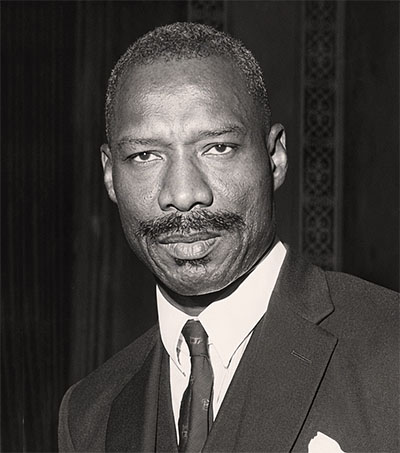
The Honourable Sir
Robert Llewellyn Bradshaw
KCNH
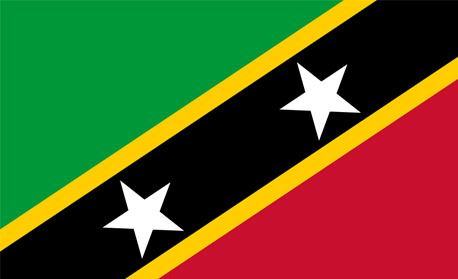
St. Kitts & Nevis
Robert Llewellyn Bradshaw
September 16, 1916
-
May 23, 1978
Sir Robert Llewellyn Bradshaw The Architectural Father of Saint Kitts and Nevis
Sir Robert Llewellyn Bradshaw stands as the preeminent political colossus in the history of Saint Kitts and Nevis. As the first Premier and a foundational architect of the modern Caribbean labor movement, his life story reflects the dramatic transformation of a colonized sugarcane island into a self-determined nation. His legacy is deeply woven into the social, economic, and political fabric of the West Indies.
Early Life and Humble Beginnings
Robert Llewellyn Bradshaw was born on September 16, 1916, in Saint Paul’s Village, Saint Kitts. His mother, Mary Jane Francis, worked as a domestic servant. His father, William Bradshaw, was a skilled blacksmith who migrated to the United States when young Robert was only nine months old. This left the infant to be raised in an environment of material scarcity but immense spiritual and communal wealth.
Raised primarily by his grandmother, Bradshaw grew up in a traditional rural setting. His grandmother was a strict disciplinarian who prioritized formal education and proper social conduct. She also introduced him to the concept of the Saint Kitts Benevolent Society, an early community organization that planted the seeds of collective action in his young mind.
Bradshaw attended the local elementary school in Saint Paul’s Village, where he proved to be a capable student. Despite a lack of luxury, his childhood was enriched by the vibrant culture of the rural working class. This early exposure to the grueling realities of the sugar estate workers deeply influenced his worldview, fueling a lifelong desire to challenge systemic economic inequality.
Entering the Industrial Trenches
At the age of sixteen, Bradshaw moved to the capital city of Basseterre to seek employment. In 1932, he secured a position as a machine apprentice at the Saint Kitts Basseterre Sugar Factory. This facility was the economic engine of the island, controlled entirely by white colonial elites who maintained rigid control over the black labor force.
Working in the hot, dangerous environment of the sugar factory, Bradshaw witnessed firsthand the exploitation of Kittitian laborers. The workers faced low wages, long hours, and a complete lack of job security or medical protections. His innate sense of justice made it impossible for him to remain silent.
In 1940, a major labor strike erupted across the sugar estates. Bradshaw threw himself into the struggle, demonstrating natural leadership, exceptional oratorical skills, and an analytical mind. His activism caught the attention of early labor pioneers, including Joseph Nathaniel France. Bradshaw quickly transitioned from a factory worker into a full time organizer for the Saint Kitts Nevis Trades and Labour Union.
Rise to Labor Leadership
Bradshaw rose rapidly through the ranks of the union due to his tireless work ethic and absolute dedication to the working class. By 1944, he was appointed the president of the Saint Kitts Nevis Trades and Labour Union. He transformed the organization from a loose association into a highly disciplined, powerful instrument for social change.
Under his stewardship, the union confronted the powerful sugar planters. Bradshaw organized several highly effective strikes that successfully forced the plantocracy to increase wages, improve workplace safety, and recognize the basic human dignity of the laborers. His reputation as a fierce defender of the poor grew across the region.
Bradshaw understood that industrial agitation alone would not dismantle colonial oppression. He recognized that the working class needed direct representation in the halls of government. To achieve this, he helped forge the political wing of the movement, which became the Saint Kitts Nevis Anguilla Labour Party.
Transition to Constitutional Politics
The introduction of universal adult suffrage in 1952 marked a seismic shift in the political landscape of the Caribbean. For the first time, the black majority had the right to vote. Bradshaw and his Labour Party comrades swept the elections, winning a resounding victory that shattered the political monopoly of the traditional plantocracy.
Bradshaw assumed the role of Member for Trade and Production, taking on immense administrative responsibilities. When the ministerial system was formally established, he became the first Chief Minister of the territory. In this capacity, he began implementing sweeping reforms aimed at modernizing the local economy and improving public welfare.
His governance style was characterized by a unique blend of radical populism and formal British administrative stateliness. Bradshaw was famous for his immaculate attire, often wearing tailored suits, a pocket watch, and a walking stick. He used this sophisticated persona to command respect from colonial officials while remaining deeply connected to the barefoot workers in the cane fields.
The Vision of West Indian Regionalism
Bradshaw was a passionate advocate for Caribbean unity. He believed that the small islands of the West Indies could only survive the global post colonial era by pooling their resources and speaking with a singular, unified voice.
When the West Indies Federation was established in 1958, Bradshaw left local politics to serve on the regional stage. He was elected to the Federal Parliament and was appointed the Federal Minister of Finance. He worked alongside legendary Caribbean statesmen like Grantley Adams of Barbados and Norman Manley of Jamaica.
The collapse of the Federation in 1962 was a devastating blow to Bradshaw’s regional dreams. However, he returned to Saint Kitts with an undivided focus on achieving self determination for his home territory. He resumed leadership of the local government, prepared to guide his people toward full autonomy.
The Premier and National Transition
In 1967, Saint Kitts, Nevis, and Anguilla achieved the status of an Associated State with the United Kingdom. This constitutional advancement granted the islands full internal self government, while Britain retained responsibility for defense and foreign affairs. Robert Bradshaw became the first Premier of the Associated State.
His premiership was immediately tested by severe political crises. The island of Anguilla, deeply dissatisfied with central administration from Basseterre, staged a secessionist revolt in 1967. Despite Bradshaw’s intense efforts to preserve the tripartite state, Anguilla eventually separated, an outcome that remained a profound political scar for the rest of his career.
Domestically, Bradshaw achieved his greatest triumph by tackling the historical sugar industry. In 1975, his administration officially nationalized the sugar lands and the central sugar factory. This historic move broke the final remnants of colonial economic dominance, returning the island’s primary resource to the people who had worked it for centuries.
Final Days and Passing
In the late 1970s, Bradshaw’s health began to decline rapidly. Despite his physical frailty, he refused to abandon his executive duties, remaining a steadfast leader even as he battled advanced prostate cancer.
He traveled to London for medical treatment but returned to his beloved homeland when it became clear that his illness was terminal. On May 23, 1978, Sir Robert Llewellyn Bradshaw passed away at his home in Basseterre at the age of sixty one. His death plunged the entire Caribbean into a state of profound mourning.
Tens of thousands of citizens lined the streets of Basseterre to witness his state funeral, paying tribute to the man who had lifted them out of economic servitude. He was buried in the Springfield Cemetery, leaving behind a legacy of unmatched public service.
An Enduring National Icon
The impact of Robert Bradshaw on Saint Kitts and Nevis cannot be overstated. He was posthumously declared the first National Hero of the federation, and his birthday, September 16, is celebrated annually as National Heroes Day. The international airport in Saint Kitts proudly bears his name.
Bradshaw took a fragmented plantation society and forged the foundations of a proud, independent, and progressive nation. His life remains an inspiring testament to the power of organized labor, political courage, and unyielding love for one’s country.
My Caribbean
Legends from St. Kitts & Nevis
Caribbean Heritage
Which two nations fought for control of St. Kitts in the 1600s?
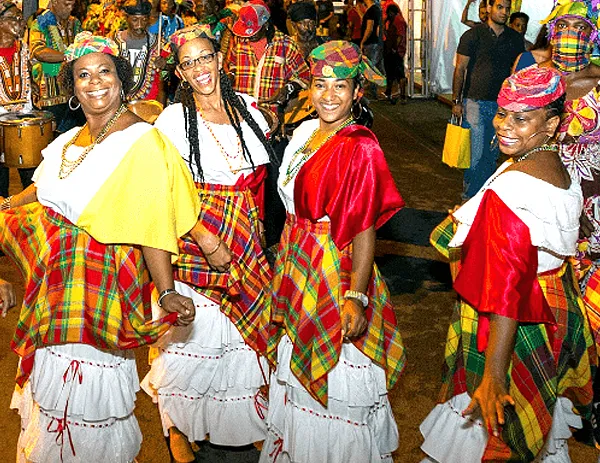
What major cultural celebration highlights Saint Lucia’s Creole heritage?
Where did the musical instrument known as the Steel Pan originally originate from?