
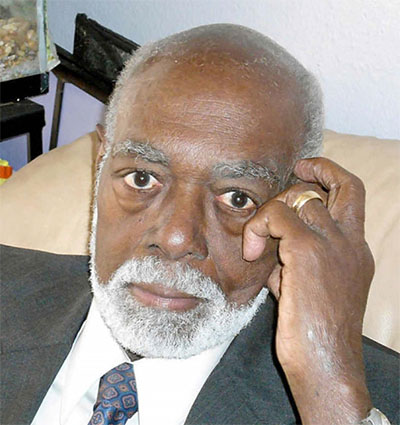
Camille Emanuel Baly
1936
-
2012
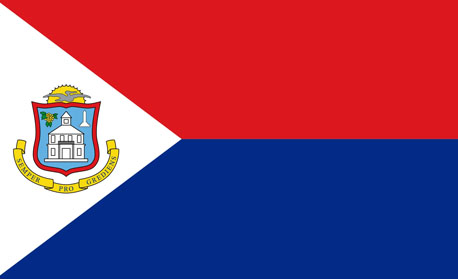
St. Maarten
Facebook
WhatsApp
Camille Emanuel Baly
December 15, 1936
-
August 20, 2012
The Guardian of Island Memory: The Life and Legacy of Camille E. Baly
For decades, the Caribbean island of St. Maarten/St. Martin has stood as a unique crossroads of European administration, African heritage, and a vibrant local culture that refuses to be erased. In the twentieth century, as globalism and rapid tourism development threatened to sweep away the oral histories, languages, and traditions of the Windward Islands, one man stood as a fortress against cultural amnesia. That man was Camille E. Baly (1936–2012). Affectionately known across the island as "Meneer Baly" (Mister Baly), he was a visionary educator, a profound poet, a meticulous historian, and a senior public administrator. His life’s work was dedicated to a single, powerful mission: ensuring that the people of St. Maarten understood their history, took pride in their identity, and never forgot the struggles of those who paved the way for their freedom.
Early Life and the Roots of Identity
Camille Baly was born on St. Maarten in 1936, a period when the island was a quiet, largely agrarian society far removed from the bustling tourist hub it would eventually become. Growing up in a close-knit community, Baly was raised on the rich oral storytelling traditions of the old Caribbean. From an early age, he listened intently to the elders of the island, absorbing the folktales, the traditional songs, and the historical accounts of survival that had been passed down through generations of families.
These early experiences deeply shaped his worldview. Baly recognized that while the formal education system of the time focused heavily on European history, geography, and culture—due to the island's status within the Dutch Kingdom—the actual lived experiences and heritage of the Afro-Caribbean population were missing from the classroom. This stark contrast ignited a lifelong passion in young Baly to bridge the gap between formal European schooling and the authentic local history of the Windward Islands.
The Master Educator and the Classroom Revolution
To understand Baly's impact, one must first look at his career as an educator. He began his professional journey in the classroom, working as a teacher where he quickly earned the respectful title of "Meneer Baly." He was not a conventional teacher who merely read from prescribed textbooks. Instead, Baly believed that education should be an act of liberation and empowerment, particularly for young people of color in the Caribbean.
In his classroom, local geography, native flora and fauna, and island folklore became vital parts of the curriculum. He taught his students to look at the hills, the salt ponds, and the beaches of St. Maarten not just as scenery, but as historical archives that carried the footprints of their ancestors. He used traditional storytelling techniques to teach complex lessons, blending the English spoken natively by the islanders with the Dutch language required by the formal educational system. By doing so, Baly validated the linguistic identity of his students while simultaneously preparing them to navigate the wider administrative world of the Kingdom of the Netherlands.
A Trailblazer in Public Administration and Cultural Policy
Baly’s exceptional intellect and deep commitment to the community eventually led him out of the classroom and into the halls of public administration. Recognizing his administrative talents and his profound cultural insight, the local government appointed him as the Head of the Department of Youth, Culture, and Education.
In this role, Baly transformed from a local schoolteacher into the chief architect of St. Maarten’s cultural policies. He understood that a nation cannot truly develop economically if it lacks a strong cultural foundation. As a senior civil servant, he worked tirelessly to institutionalize cultural preservation. He established programs that documented oral histories, funded local artistic initiatives, and organized workshops to ensure that traditional arts—such as steelpan music, folk dancing, and traditional cooking—were preserved and passed on to younger generations.
Baly was highly respected for his absolute professionalism and non-partisan approach. Throughout his long career in public service, he served as a trusted cultural advisor to numerous government leaders, commissioners, and prime ministers. Leaders from various political backgrounds sought his counsel because they knew Baly’s only allegiance was to the people and the heritage of St. Maarten.
The Literary Voice of the Windward Islands
Beyond his roles in education and government, Camille Baly was a gifted writer and poet. He recognized that literature is a vital mirror for any society, and he used his pen to give voice to the unspoken thoughts, struggles, and triumphs of the Caribbean spirit. His poetry and essays focused heavily on themes of identity, freedom, nature, and the psychological impact of colonialism.
Writing primarily in English—the mother tongue of St. Maarten—Baly captured the unique cadence, rhythm, and soul of island life. His literary works were not meant for elitist circles; they were written for the everyday people of the island. He frequently read his poetry at cultural festivals, school assemblies, and public gatherings, using his commanding yet warm voice to captivate audiences. Through his writing, he proved that the experiences of the people of the Windward Islands were worthy of high literature, helping to build a distinct St. Maarten literary identity.
Championing Emancipation Day and the Diamond 26
One of the most significant and lasting achievements of Camille Baly’s life was his instrumental role in elevating the historical awareness of Emancipation Day on St. Maarten. For generations, the formal end of slavery on July 1, 1863, was not given the national prominence it deserved in the public sphere. Baly, alongside other cultural advocates, lobbied and worked continuously to change this.
He believed that celebrating Emancipation Day was essential for collective healing and national pride. Baly was particularly passionate about unearthing the specific stories of resistance on the island. He championed the legacy of the "Diamond 26"—a group of twenty-six enslaved men, women, and children who courageously escaped from a plantation on the Dutch side of the island to the French side, where slavery had already been abolished, successfully claiming their freedom. By highlighting these local narratives of courage, Baly helped transform July 1st into an official national public holiday on St. Maarten, forever changing how the island honors its ancestors.
International Impact and Passing on the Torch
Camille Baly’s influence was not confined to the shores of his home island. As a representative of St. Maarten within the wider Dutch Kingdom, he frequently traveled to the Netherlands and other Caribbean islands to advocate for cultural exchanges and educational reforms. He bridge-built between the European Netherlands and the Caribbean territories, demanding that the history of the transatlantic slave trade and Caribbean culture be given proper recognition within the shared history of the Kingdom.
In his later years, Baly focused heavily on mentorship. He recognized that his time on earth was limited, and he deliberately invested his energy into nurturing the next generation of St. Maarten’s creative minds. He provided guidance, critique, and immense encouragement to young artists, dancers, writers, and cultural practitioners. Many of the island's contemporary cultural leaders openly credit "Meneer Baly" as the mentor who gave them the confidence to pursue their creative careers.
Posthumous Honors and an Enduring Legacy
When Camille Baly passed away in August 2012, the entire island of St. Maarten, as well as the wider Caribbean community, plunged into deep mourning. The government and public institutions immediately moved to ensure that his towering legacy would be permanently preserved.
Just weeks before his passing, during the 2012 Emancipation Day celebrations, the Ministry of Education, Culture, Youth, and Sports presented him with a prestigious diamond-shaped plaque engraved with the numeral 26, cementing his connection to the preservation of the Diamond 26 history. Following his death, the St. Maarten Department of Culture honored his memory by establishing the "Camille Baly Visionary of Cultural Legacy Award," which serves as the highest accolade given to local creative pioneers who demonstrate the same lifelong dedication to heritage that Baly possessed.
Furthermore, his impact is recognized internationally. In Amsterdam, Netherlands, a street was officially named "Camille Balystraat" in his honor, ensuring that his contributions to education and culture are remembered on both sides of the Atlantic. Today, through the Sint Maarten Library's archived series and the ongoing work of the educators he inspired, Camille Baly remains the definitive gold standard for what it means to love, protect, and celebrate the soul of an island.
My Caribbean
Cherished people from St. Maarten

Caribbean Heritage
Which two nations fought for control of St. Kitts in the 1600s?
What Caribbean country is known as the "Spice Isle"?

Ackee and Saltfish is the national dish of which Caribbean country?