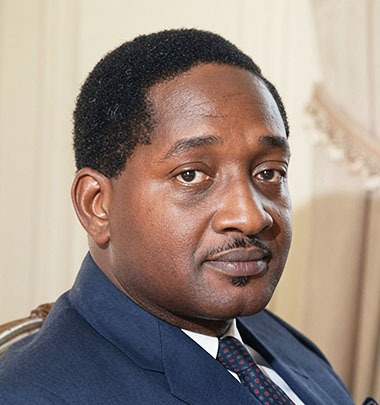
His Excellency
Linden Forbes Sampson Burnham
O.E., S.C
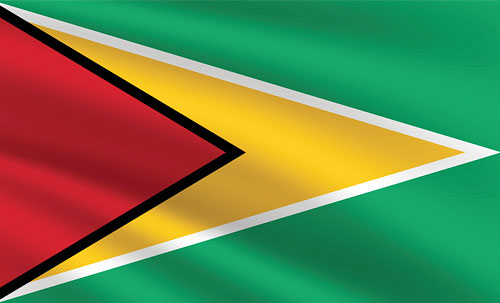
Guyana
Linden Forbes Sampson Burnham
April 20, 1923
-
August 6, 1985
Linden Forbes Sampson Burnham stands as one of the most influential and controversial figures in the political history of Guyana. A lawyer by training and a nationalist by conviction, Burnham played a central role in leading Guyana from British colonial rule to independence and later into a republic.
His leadership spanned decades, shaping the nation’s political, economic, and social landscape in profound and lasting ways. Admired by supporters as a visionary and criticized by opponents as authoritarian, Burnham’s legacy remains deeply complex and widely debated.
Early Life and Education
Linden Forbes Sampson Burnham was born on April 20, 1923, in Georgetown, British Guiana, now Guyana. He grew up in a relatively modest but disciplined household. His father, James Ethelbert Burnham, was a schoolmaster, and his mother, Rachel Abigail Sampson, played a strong role in nurturing his early intellectual development. From a young age, Burnham demonstrated a keen interest in academics and leadership.
He attended Central High School in Georgetown before moving on to Queen’s College, one of the most prestigious secondary schools in the colony. His academic excellence earned him a scholarship to study abroad. Burnham later attended the University of London, where he pursued a degree in law. He continued his legal training at Gray’s Inn in London, eventually qualifying as a barrister.
While in London, Burnham became actively involved in political discussions and organizations focused on anti colonialism and Caribbean self determination. These experiences helped shape his political ideology and strengthened his commitment to independence for British Guiana.
Entry into Politics
Upon returning to British Guiana in the late 1940s, Burnham quickly established himself as a prominent lawyer and public speaker. His charisma, intelligence, and strong oratory skills made him a natural political figure. In 1950, he became one of the founding members of the People’s Progressive Party, alongside Cheddi Jagan and Janet Jagan.
The People’s Progressive Party initially united various ethnic and social groups under a common goal of independence and social reform. Burnham served as chairman of the party, while Cheddi Jagan was its leader. However, ideological differences soon emerged. Burnham leaned toward a more moderate and pragmatic approach, while Jagan’s views were more explicitly socialist and aligned with Marxist principles.
Political Division and the Formation of the People’s National Congress
By 1955, the internal tensions within the People’s Progressive Party reached a breaking point. Burnham split from the party and formed the People’s National Congress. This division marked the beginning of a long and often bitter political rivalry between Burnham and Jagan, as well as the emergence of ethnic polarization in Guyanese politics, with Burnham drawing significant support from Afro Guyanese communities and Jagan maintaining strong backing among Indo Guyanese populations.
The split fundamentally reshaped the political landscape of the country and set the stage for decades of political competition and division.
Path to Independence
During the late 1950s and early 1960s, Burnham positioned himself as a key figure in negotiations for Guyana’s independence from Britain. The political climate during this period was tense, marked by labor unrest, strikes, and episodes of violence. International Cold War dynamics also influenced the situation, as Western powers were wary of Jagan’s perceived socialist leanings.
In 1964, Burnham formed a coalition government with the United Force, enabling him to become Premier of British Guiana. This coalition was instrumental in shifting political power away from Jagan and paving the way for independence.
On May 26, 1966, Guyana officially gained independence from Britain, with Burnham serving as its first Prime Minister. This moment marked a historic achievement and a turning point in the nation’s history.
Leadership as Prime Minister
As Prime Minister, Burnham embarked on an ambitious agenda to transform Guyana into a self sufficient and unified nation. He promoted cooperative socialism, a system intended to combine elements of socialism with local ownership and participation.
Burnham’s government nationalized key industries, including sugar, bauxite, and other major sectors of the economy. He believed that state control of these resources would ensure that wealth remained within the country and benefited its citizens. However, these policies had mixed results. While they increased national ownership, they also led to economic inefficiencies and declining productivity in some sectors.
Burnham also emphasized education and cultural development. His administration expanded access to education, promoted national pride, and encouraged the celebration of Guyanese identity. Initiatives such as free education at various levels and the promotion of local arts and culture were central to his vision.
Transition to Executive Presidency
In 1970, Guyana became a republic, and Burnham continued as Prime Minister. Over time, however, he consolidated power, and constitutional changes in 1980 transformed the political system. Burnham assumed the role of Executive President, a position that granted him extensive authority over the government.
His presidency was marked by increasing centralization of power and allegations of electoral manipulation. Critics argued that elections during his rule were neither free nor fair, while supporters claimed that his leadership provided stability during a challenging period.
Economic Challenges and Policies
The 1970s and early 1980s were difficult years for Guyana’s economy. Global economic pressures, declining commodity prices, and internal inefficiencies contributed to significant challenges. Burnham’s policies of nationalization and state control, while well intentioned, often struggled to deliver sustainable growth.
Shortages of basic goods became common, and many citizens faced economic hardship. The government implemented rationing systems and encouraged self reliance through initiatives such as the grow more food campaign. Despite these efforts, the economy continued to face significant difficulties.
Burnham also pursued international alliances that reflected his independent foreign policy stance. He maintained relationships with both Western and socialist countries, seeking to position Guyana as a non aligned nation.
Social and Cultural Impact
Beyond politics and economics, Burnham had a profound influence on Guyanese society and culture. He promoted national unity, though this goal was often challenged by ethnic divisions. His emphasis on cultural pride led to the celebration of Guyanese heritage through festivals, education, and national symbols.
Burnham was also known for his personal charisma and commanding presence. He was a skilled speaker who could inspire large audiences and articulate a vision of national progress. His leadership style combined intellectual rigor with a strong sense of authority.
Controversies and Criticism
Burnham’s legacy is not without controversy. Critics have pointed to issues such as authoritarian governance, restrictions on press freedom, and alleged electoral fraud. His administration was often accused of suppressing political opposition and consolidating power in ways that undermined democratic principles.
Human rights concerns were also raised during his presidency, particularly in relation to political dissent and state control. These criticisms have led to ongoing debates about his role in shaping Guyana’s political system.
At the same time, supporters argue that Burnham faced immense challenges, including external pressures and internal divisions, and that his leadership helped maintain national stability during turbulent times.
Final Years and Death
In the early 1980s, Burnham’s health began to decline. Despite this, he remained actively involved in governance and continued to lead the country. On August 6, 1985, Linden Forbes Sampson Burnham died unexpectedly during throat surgery in Georgetown.
His death marked the end of an era in Guyanese politics. He was succeeded by Desmond Hoyte, who began a process of political and economic reform in the years that followed.
Legacy
Linden Forbes Sampson Burnham remains a towering figure in Guyana’s history. His contributions to independence, nation building, and cultural development are widely recognized, even as debates continue about his methods and policies.
For many, he is remembered as a visionary leader who sought to empower his country and assert its sovereignty on the global stage. For others, he represents a period of political control and economic struggle.
Today, Burnham’s legacy is reflected in Guyana’s institutions, its political culture, and its ongoing efforts to balance unity, democracy, and development. His life story serves as a powerful reminder of the complexities of leadership and the enduring impact of those who shape the course of a nation.
Conclusion
The life of Linden Forbes Sampson Burnham is a story of ambition, intellect, and determination. From his early days as a promising student to his rise as a national leader, he played a defining role in the history of Guyana. His achievements and controversies alike continue to influence discussions about governance, identity, and progress in the country.
Understanding Burnham’s life provides valuable insight into the challenges of nation building and the enduring quest for independence and self determination in the Caribbean.
My Caribbean
Legends from Guyana

Caribbean Heritage
What Caribbean country is known as the "Spice Isle"?

Ackee and Saltfish is the national dish of which Caribbean country?

Which two nations fought for control of St. Kitts in the 1600s?