
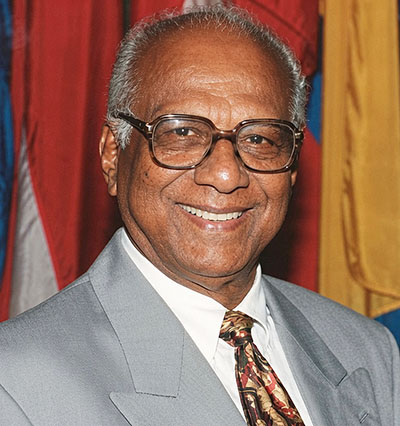
His Excellency Dr.
Cheddi Berret Jagan
B.Sc., D.D.S.
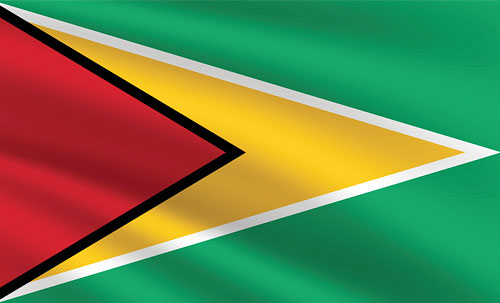
Guyana
Cheddi Berret Jagan
March 22, 1918
-
March 6, 1997
Dr. Cheddi Berret Jagan stands as one of the most towering figures in Caribbean history. Widely regarded as the "Father of the Guyanese Nation," he dedicated over fifty years of his life to dismantling British colonial rule, advocating for the working class, and establishing democratic governance in Guyana. Born on March 22, 1918, Jagan rose from the obscurity of a rural sugar plantation to the highest political offices of his country, serving as Chief Minister, Premier, and ultimately the President of Guyana. His life was defined by an unyielding commitment to Marxist-Leninist ideals, social justice, and the emancipation of the poor. His death on March 6, 1997, marked the end of an era for the region, leaving behind an indelible legacy that continues to shape modern Guyanese society and identity.
Early Life and Humble Beginnings
Cheddi Jagan was born in Ankerville, a small village nestled within the Port Mourant sugar plantation in the county of Berbice, British Guiana. He was the eldest of eleven children born to Indian Hindu parents, Bachaoni and Jagan, who belonged to the Kurmi caste. His parents had immigrated to the colony as young infants in 1901 aboard the ship Elbe, arriving as part of the massive indentured labor system that replaced slavery on the Caribbean sugar estates.
Growing up on a sugar plantation profoundly influenced Jagan’s political consciousness. He witnessed firsthand the brutal economic exploitation, systemic poverty, and social stratification enforced by colonial sugar corporations like Bookers. The grueling labor and meager earnings of his parents instilled in him a lifelong empathy for the working class. Recognizing the limitations of estate life, Jagan’s father was determined to secure a better future for his eldest son. At age fifteen, Jagan was sent to the capital city of Georgetown to attend Queen's College, the colony's prestigious government secondary school. The transition from a impoverished rural village to an urban environment exposed Jagan to a starkly different social hierarchy, highlighting the deep-seated class divides within Guyanese society.
Educational Journey in the United States
After completing his secondary education in 1935, Jagan faced limited employment opportunities in British Guiana. Defying the economic realities of their financial standing, his father used the family's life savings of five hundred dollars to send him to the United States to pursue higher education. In September 1936, Jagan arrived in Washington, D.C., to study pre-dental courses at Howard University. To sustain himself, he worked various low-paying jobs, including as an elevator operator and a laboratory assistant.
In 1938, Jagan transferred to the Northwestern University Dental School in Chicago, Illinois. Over the next four years, he balanced a rigorous dental curriculum with courses in social sciences at the Central YMCA College, where he earned a Bachelor of Science degree. It was during this period in Chicago that Jagan’s political philosophy crystallized. He read extensively on economics, Marxism, and international liberation movements, deeply influenced by the Great Depression and the global rise of anti-fascism.
Crucially, his time in Chicago brought him into contact with Janet Rosenberg, a student nurse and political activist with left-wing sympathies. The couple found common ground in their shared ideals of social justice and anti-colonialism. They were married on August 5, 1943, despite strong initial resistance from both of their families. Janet would become Jagan's lifelong political partner, strategist, and a foundational leader in her own right within the Guyanese independence movement.
Entry into Politics and the PAC
Dr. Jagan returned to British Guiana in October 1943 with his new bride and established a successful dentistry practice in Georgetown. However, his primary passion remained political mobilization. He quickly immersed himself in the local labor movement, becoming a vocal advocate for urban workers and estate laborers. In 1946, alongside Janet Jagan, Jocelyn Hubbard, and Ashton Chase, he co-founded the Political Affairs Committee (PAC).
The PAC aimed to foster political awareness among the working class and advocate for Marxist principles of economic liberation. They published the PAC Bulletin, a newsletter that critiqued the colonial administration and the exploitation of the sugar estates. In 1947, Jagan contested and won a seat in the Legislative Council as an independent candidate, representing the Central Demerara constituency. From this platform, he vigorously challenged the colonial status quo, advocating for universal adult suffrage and land reform.
Founding the PPP and Early Governance
Seeking a more structured vehicle to challenge British rule, Cheddi and Janet Jagan joined forces with Afro-Guyanese lawyer Forbes Burnham to found the People's Progressive Party (PPP) on January 1, 1950. Jagan served as the party’s leader, while Burnham became its chairman. The PPP was a historic milestone, marking Guyana's first modern, multi-ethnic political party that successfully united the two largest demographic groups: Indo-Guyanese and Afro-Guyanese workers.
The party’s primary goal was achieving immediate self-government and implementing democratic reforms. Their efforts bore fruit when the British colonial office granted a new constitution introducing universal adult suffrage in 1953. In the historic April 1953 elections, the PPP won a resounding victory, capturing eighteen out of twenty-four seats in the House of Assembly. Cheddi Jagan was subsequently appointed as the leader of government business, a position equivalent to Chief Minister.
However, Jagan’s tenure was exceptionally brief. His administration immediately introduced radical socio-economic reforms, including labor laws aimed at recognizing independent trade unions over company-controlled ones. Terrified by Jagan’s open Marxist rhetoric and fearing the establishment of a communist foothold in the Americas, British Prime Minister Winston Churchill suspended the constitution in October 1953, just 133 days into the PPP’s term. The British military dispatched troops to Georgetown, dismissed the government, and placed Jagan and other PPP leaders under house arrest and movement restrictions. Jagan was later imprisoned for six months in 1954 for violating these restrictions.
Cold War Rivalries and the Long Opposition
The suspension of the constitution and colonial interference triggered a devastating internal rupture within the independence movement. In 1955, ideological differences and racial tensions exacerbated by colonial authorities caused the PPP to split. Forbes Burnham broke away to form what would eventually become the People's National Congress (PNC), drawing support primarily from the Afro-Guyanese population, while Jagan retained control of the PPP, supported largely by Indo-Guyanese agricultural workers. This racial polarization would plague Guyanese politics for decades to come.
Despite the split, Jagan’s PPP won the subsequent elections in 1957 and 1961 under revised constitutional frameworks. Jagan served as the Premier of British Guiana from 1961 to 1964. This period was marked by extreme civil unrest, strikes, and racial riots orchestrated by political opponents, labor unions, and covert foreign intelligence operations. During the height of the Cold War, United States President John F. Kennedy feared that an independent Guyana under Jagan would become a "second Cuba." Consequently, the CIA and British intelligence agencies actively undermined Jagan’s administration through covert funding of opposition strikes and the implementation of a proportional representation electoral system designed to disadvantage the PPP.
The strategy succeeded. Following the December 1964 elections, the PNC formed a coalition government with the United Force party, forcing Jagan out of office. Guyana gained full independence in 1966 under Burnham’s leadership, leaving Jagan to spend the next twenty-eight years as the Leader of the Opposition. Throughout the 1970s and 1980s, the PNC regime maintained authoritarian control through heavily rigged elections. Jagan remained an unyielding voice for democracy, using his position to expose electoral fraud and advocate for international human rights.
The Democratic Return and Presidency
With the collapse of the Soviet Union and the easing of Cold War anxieties, international pressure mounted on Guyana to conduct free and transparent elections. In October 1992, Guyana held its first fully democratic elections since independence, monitored by international observers including former U.S. President Jimmy Carter. The PPP achieved a monumental victory, and Dr. Cheddi Jagan was sworn in as the 4th President of Guyana on October 9, 1992.
As president, Jagan focused heavily on economic rehabilitation, repairing the nation’s crumbling infrastructure, and improving social services like education, housing, and water supply. He governed with a pragmatism that surprised many of his old critics, actively courting foreign investment while maintaining a focus on alleviating poverty. On the international stage, he became a passionate advocate for developing nations, championing the "New Global Human Order," a proposal adopted by the United Nations General Assembly that called for global economic equity and debt relief for poor countries.
Death and Legacy
Dr. Cheddi Jagan's presidency was cut short when he suffered a severe heart attack on February 14, 1997. He was flown to the United States for specialized treatment at the Walter Reed Army Medical Center in Washington, D.C.. Despite undergoing heart surgery, he succumbed to his complications and passed away on March 6, 1997, at the age of 78.
Following his death, his body was returned to Guyana, where he was honored with a massive state funeral that drew hundreds of thousands of citizens from all ethnic backgrounds. He was cremated according to Hindu traditions at Babu John, Port Mourant, close to where his journey had begun. Jagan left behind an unblemished reputation for personal integrity, humility, and dedication to his people. He authored several influential books, including The West on Trial, which detailed his perspective on his country’s struggle for freedom. Today, he remains permanently etched in history as the architect of Guyana's independence and the enduring conscience of its democratic spirit.
My Caribbean
Legends from Guyana
Caribbean Heritage
Which two nations fought for control of St. Kitts in the 1600s?
What major cultural celebration highlights Saint Lucia’s Creole heritage?
Ackee and Saltfish is the national dish of which Caribbean country?