

The Right Excellent Sir
Lynden Oscar Pindling
NH, ON, PC, KCMG, OM, JP

Bahamas
Lynden Oscar Pindling
March 22, 1930
-
August 26, 2000
Early Life and Family Background
The Right Excellent Sir Lynden Oscar Pindling is widely celebrated as the Father of the Bahamian Nation and one of the most influential political leaders in Caribbean history. Through his vision, determination, and leadership, he guided The Bahamas from colonial rule to full independence and helped shape the modern nation that exists today.
Sir Lynden was born on March 22, 1930, in Nassau, New Providence, Bahamas, to Arnold and Viola Pindling. His father, a Jamaican immigrant, served in the Royal Bahamas Police Force before entering private business, while his mother hailed from Acklins Island. Growing up in a society marked by racial and economic inequality, young Lynden became aware of the challenges faced by the majority Black population. These experiences would later influence his commitment to social justice and political reform.
Education and Legal Career
Pindling received his early education at Government High School in Nassau, where he excelled academically. His ambition and intellect earned him the opportunity to pursue higher education abroad.
He travelled to England and enrolled at King's College, University of London, where he studied law. After completing his studies, he was called to the Bar at the Middle Temple in 1953. Returning home to The Bahamas, he established a successful legal practice and quickly earned a reputation as a skilled attorney, gifted speaker, and strong advocate for fairness and equality.
Entry into Politics
The year 1953 marked the beginning of Pindling's political journey when he became a founding member of the Progressive Liberal Party (PLP). At the time, political power in The Bahamas was largely controlled by a wealthy minority known as the Bay Street Boys. The PLP sought to give a voice to ordinary Bahamians who had long been excluded from political decision making.
Pindling's charisma, intelligence, and ability to connect with people from all walks of life quickly made him one of the party's rising stars. In 1962, he was elected leader of the Progressive Liberal Party, setting the stage for a new era in Bahamian politics.
The Road to Majority Rule
One of the defining moments in Bahamian history occurred on April 27, 1965, during what became known as "Black Tuesday." During a heated debate in the House of Assembly over electoral boundaries, Pindling dramatically threw the Speaker's ceremonial mace out of a window. The act symbolized growing frustration with political inequality and became a powerful statement against the existing system.
The event energized supporters of political reform and helped build momentum for change. Just two years later, in January 1967, the Progressive Liberal Party won a historic election victory. For the first time, the Black majority gained control of the government. This achievement became known as Majority Rule Day and remains one of the most important milestones in Bahamian history.
First Premier of The Bahamas
Following the 1967 election, Lynden Pindling became the first Black Premier of The Bahamas. His administration immediately began implementing reforms aimed at expanding opportunities for education, employment, housing, and economic development.
Under his leadership, many barriers that had limited participation in government and business were removed. His government sought to ensure that the benefits of national development were shared more broadly among the population.
Pindling's vision extended beyond political representation. He believed that Bahamians should take ownership of their nation's future and participate fully in shaping its destiny.
Leading The Bahamas to Independence
Perhaps Sir Lynden's greatest achievement came on July 10, 1973, when The Bahamas officially gained independence from Britain.
As Premier, Pindling led negotiations that paved the way for self government and nationhood. At midnight on Independence Day, the Union Jack was lowered and the Bahamian flag was raised for the first time as an independent nation.
Following independence, Pindling became the first Prime Minister of The Bahamas. His leadership during this historic transition helped ensure political stability and international recognition for the young nation.
Today, July 10 is celebrated annually as Bahamian Independence Day, commemorating the realization of a dream that Sir Lynden helped make possible.
Economic Development and Nation Building
Throughout his years in office, Pindling worked to strengthen the Bahamian economy. Tourism and financial services became key pillars of national development, generating employment and attracting foreign investment.
His government invested in infrastructure, education, healthcare, and public services. New roads, schools, airports, and government facilities were constructed across the islands.
Pindling also promoted Bahamian culture and identity, encouraging citizens to take pride in their heritage, traditions, and achievements. His efforts helped foster a stronger sense of national unity and confidence.
Challenges and Criticism
Like many long serving leaders, Sir Lynden's political career was not without controversy. During the 1980s, concerns emerged regarding drug trafficking activities within the region and allegations involving government officials.
While commissions of inquiry investigated various matters, Pindling consistently denied personal wrongdoing. Supporters argued that his accomplishments in advancing democracy and nation building far outweighed the controversies that arose during his tenure.
Despite criticism from opponents, he remained a dominant political figure and continued to win elections throughout much of his career.
Retirement from Political Leadership
After serving as Prime Minister for twenty five years, Pindling and the Progressive Liberal Party were defeated in the 1992 general election.
Although no longer Prime Minister, he remained active in public life and continued to be respected by many Bahamians as a national leader and elder statesman. His contributions to the country's development were increasingly recognized both at home and abroad.
National Hero and Final Years
In recognition of his extraordinary service, Sir Lynden received numerous honors throughout his lifetime. He was appointed a Knight Commander of the Order of St Michael and St George and received several regional and international awards.
On August 26, 2000, Sir Lynden Oscar Pindling passed away at the age of seventy. His death was met with an outpouring of grief across The Bahamas and throughout the Caribbean. Thousands of citizens paid tribute to the man who had dedicated much of his life to public service and national advancement.
Legacy
Sir Lynden Pindling's legacy remains deeply woven into the fabric of Bahamian society. He is remembered as the architect of Majority Rule, the leader who guided The Bahamas to independence, and the statesman who helped transform a colonial territory into a sovereign nation.
His vision of equality, self determination, and national pride continues to inspire generations of Bahamians. In 2014, he was formally designated one of the National Heroes of The Bahamas, ensuring that his contributions would forever be remembered.
Today, more than two decades after his passing, Sir Lynden Oscar Pindling remains one of the Caribbean's most significant political figures. His life story stands as a testament to perseverance, leadership, and the enduring power of a dream to shape the destiny of a nation.
My Caribbean
Legends from Bahamas
Caribbean Heritage
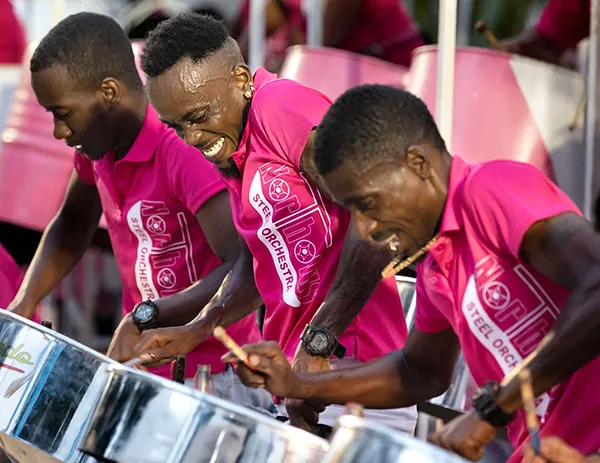
Where did the musical instrument known as the Steel Pan originally originate from?
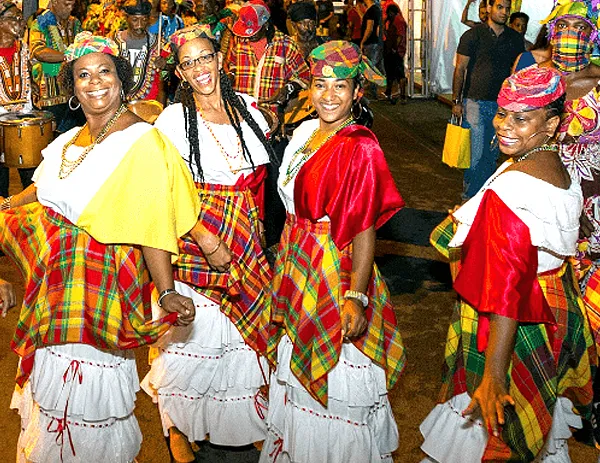
What major cultural celebration highlights Saint Lucia’s Creole heritage?
Ackee and Saltfish is the national dish of which Caribbean country?