Ras Shorty I
1941
-
2000

Trinidad & Tobago
Facebook
WhatsApp
Ras Shorty I
October 15, 1941
-
July 12, 2000
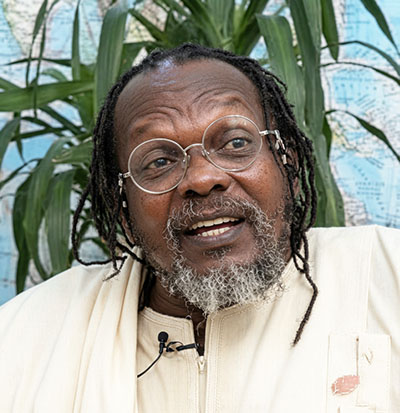
Garfield Blackman, widely known as Ras Shorty I (and formerly Lord Shorty), was a towering Trinidadian musician and cultural visionary. Honored as the Father of Soca, he revolutionized Caribbean music in the early 1970s by fusing traditional Afro-Caribbean calypsonian rhythms with East Indian melodies and percussion. His genre-defying innovations forever transformed the global soundtrack of Carnival.
The Early Life of Garfield Blackman
Garfield Blackman was born on October 6, 1941, in Lengua Village, a rural area near Princes Town in southern Trinidad. His birthplace would profoundly influence his musical destiny. Lengua Village was a culturally rich region where the descendants of freed African slaves and East Indian indentured laborers lived side by side. Growing up in this environment, Blackman was immersed in a diverse auditory landscape. From a young age, he was exposed to traditional African-rooted kaiso and calypso, as well as the mesmerizing sounds of Indian percussion like the dholak and tabla.
Blackman demonstrated a natural affinity for music early in his life. Even as a young boy, he was deeply involved in the local music scene, participating in informal village performances. His imposing physical stature—he eventually grew to a towering six-foot-four-inches—would later play a humorous role in the formulation of his first famous stage pseudonym. Before stepping into the limelight as a solo artist, he spent time arranging for local steel pan bands in the late 1950s, honing his ear for complex polyrhythms and orchestral arrangements.
The Reign of Lord Shorty: Pushing Calypso Boundaries
In the early 1960s, Blackman adopted the stage name Lord Shorty and entered the highly competitive world of professional calypso. He quickly made a name for himself in the calypso tents, which were the traditional incubators of Trinidadian music. In 1963, he scored his first major breakthrough with the hit song "Cloak and Dagger". This success propelled him into the upper echelons of the calypso hierarchy.
Throughout the 1960s, Lord Shorty established a reputation as a charismatic, energetic, and often controversial performer. He became affectionately known as "The Love Man" due to his romantic and often highly suggestive lyrics. During this era, traditional calypso was the dominant musical force in Trinidad and Tobago, celebrated for its storytelling, wit, and political commentary. However, Lord Shorty felt that the genre was becoming stagnant. While younger generations were increasingly drawn to the upbeat, infectious rhythms of Jamaican reggae and American soul, calypso seemed to be losing its mass appeal.
Lord Shorty realized that if calypso was to survive and thrive in a rapidly changing musical landscape, it needed a radical reinvention. He wanted a sound that was faster, more danceable, and reflective of the true multicultural fabric of Trinidad and Tobago. He was convinced that the key to this new sound lay in the rich musical traditions of the island's East Indian population, which had remained largely separate from mainstream Afro-Trinidadian calypso.
The Birth of Soca: Soul of Calypso
In the early 1970s, Lord Shorty began a period of intense and groundbreaking musical experimentation. He sought out East Indian musicians and began to study the intricate rhythms and unique tonal qualities of instruments such as the harmonium, sitar, and tabla. He wanted to blend these eastern elements seamlessly with the western brass and percussion of traditional calypso.
This bold experimentation resulted in the creation of a brand-new musical genre: Soca. Lord Shorty originally coined the term "Sokah". He famously explained the etymology of the word in interviews: the "So" was derived from the foundational beat of calypso, while the "kah" was chosen because "kah" represents the first consonant of the Indian alphabet, symbolizing the East Indian influence on the rhythm. Though originally spelled "sokah," the spelling later evolved into "soca" in mainstream media.
In 1973, Lord Shorty released the seminal track "Indrani," which is widely celebrated by music historians as the very first recorded soca song. The song was an audacious blend of calypso and East Indian instrumentation. It caused a sensation across Trinidad and Tobago. In 1974, he cemented his new sound with the release of the landmark album Endless Vibrations. This album demonstrated the full potential of the soca rhythm, offering a super-sweet, heavily syncopated, and intensely danceable sound.
However, the creation of soca was not initially met with universal acclaim. Because he was crossing deeply entrenched cultural and ethnic lines, Lord Shorty faced significant criticism. Some conservative members of the East Indian community accused him of desecrating their traditional music, while some traditionalist Afro-Trinidadians felt he was abandoning the true spirit of calypso. Despite the backlash, Endless Vibrations was a massive commercial success and created a devoted following among younger, forward-thinking musicians who recognized the brilliance of his fusion.
Transition to Ras Shorty I: A Spiritual Awakening
As Lord Shorty enjoyed massive success, his life underwent a profound and unexpected transformation. In the late 1970s, he began to question the hedonistic lifestyle associated with his "Love Man" persona and the frenetic, alcohol-fueled environment of the Carnival circuit. He began to seek a deeper spiritual path.
In the early 1980s, Blackman embraced the Rastafarian faith. He officially adopted the name Ras Shorty I, shedding his "Lord Shorty" moniker and the flamboyant stage persona that had made him famous. Along with his name and religion, his entire approach to music and life underwent a drastic shift. He grew his hair into dreadlocks and started to focus heavily on spiritual themes.
Moving away from the commercial soca and calypso circuits, Ras Shorty I relocated with his large family to the remote, forested region of Piparo in southern Trinidad. Here, he built a self-sustaining life and immersed himself in family, nature, and spirituality. He recognized that his previous music, while commercially and culturally significant, often promoted themes of partying and hedonism. As a Rastafarian, he felt a responsibility to use his immense musical talents to spread positive, spiritual, and family-oriented messages.
The Jamoo Era and Later Years
In the solitude of the Piparo forest, Ras Shorty I did not stop creating music. Instead, he pioneered yet another new musical style, which he called Jamoo. Jamoo, an abbreviation of "Jehovah Music," was a unique blend of soca rhythms with gospel and inspirational themes. His music now centered on praising God, promoting family values, and warning against societal ills such as drug abuse and moral decay.
Ras Shorty I’s anti-drug anthem, "Watch Out Children," became a massive international hit. The song transcended Caribbean borders, was translated into multiple languages, and became an anthem for youth and families across the globe. Through Jamoo, he proved that the vibrant, infectious rhythms he had pioneered could be used as a vehicle for positive, uplifting messages rather than just party music.
During this time, Ras Shorty I also dedicated much of his life to his family and to mentoring young artists. He raised a large family, with many of his children following in his musical footsteps and carrying on the Blackman family's rich artistic legacy. He provided a nurturing environment where his children could learn to play instruments and sing, transforming his Piparo compound into a hub of creativity and positive living.
The Immeasurable Legacy of Ras Shorty I
Ras Shorty I passed away on July 12, 2000, in Port-of-Spain, Trinidad, after a battle with bone cancer. Although his time on earth came to an end, his contribution to Caribbean culture remains absolutely immeasurable. He is universally celebrated as the undisputed Father of Soca.
The genre of soca, which he developed in the 1970s, has evolved to become the definitive sound of Carnival not only in Trinidad and Tobago but across the entire Caribbean diaspora, including islands like Barbados, Saint Vincent, Grenada, and Antigua. It has even heavily influenced global pop music and electronic dance genres.
Furthermore, Lord Shorty's early experiments with Indian rhythms also laid the foundation for the creation of Chutney Soca, another massively popular Caribbean genre that emerged when soca was played with more traditional East Indian instrumentation. Out of one bold, syncretic musical idea, Ras Shorty I effectively sparked multiple, enduring cultural movements.
His influence lives on strongly through the countless artists who continue to build upon the foundation he established. The Blackman family remains musical royalty in the Caribbean. His children, such as Abbi Blackman, and his grandchildren, like soca sensation Nailah Blackman, continue to shape the modern sound of Caribbean music, ensuring that the visionary spirit of Ras Shorty I remains relevant in the modern era.
Beyond just the music itself, Ras Shorty I's legacy is also about cultural unity. By successfully and harmoniously blending African-derived calypso and East Indian rhythms, he bridged a deep cultural divide in Trinidad and Tobago. His life and work stand as a testament to the power of artistic expression to bring diverse communities together and create something entirely new and beautiful.
Ras Shorty I’s journey from "The Love Man" Lord Shorty to the spiritually grounded Ras Shorty I shows a man who was constantly evolving. He was not afraid to challenge the status quo, both musically and personally. His creativity and vision transformed the sound of Caribbean music and earned him lasting recognition as one of Trinidad and Tobago’s most influential cultural figures. His legacy ensures that the cultural traditions of Trinidad and Tobago will continue to reach audiences and inspire dancers around the world for generations to come.
My Caribbean
Cherished people from Trinidad & Tobago



Caribbean Heritage
Ackee and Saltfish is the national dish of which Caribbean country?
What major cultural celebration highlights Saint Lucia’s Creole heritage?
What Caribbean country is known as the "Spice Isle"?